Home › Commercial Gravel-to-Asphalt Conversions
Upgrade rough surfaces with commercial gravel to asphalt conversions in Jacksonville, FL. We convert gravel and dirt lots, drives, and access roads into smooth, durable asphalt. Businesses gain cleaner sites, better drainage, and more professional looking parking and traffic areas.
Precision Asphalt Jacksonville provides professional commercial gravel to asphalt throughout Jacksonville, FL, Florida and the surrounding area. Our licensed, insured crew delivers safe, clean, on-time work with a free estimate before anything begins. Call (904) 817-0896 or request your free quote.
Commercial Gravel-to-Asphalt Conversions for Jacksonville Properties
If you are tired of dust, mud, and constant grading on your commercial gravel lot, Precision Asphalt Jacksonville specializes in turning rough gravel surfaces into smooth, durable asphalt that works for your business every day. We focus specifically on commercial gravel to asphalt conversions in the Jacksonville, FL area, so we understand the soils, weather, and traffic patterns that affect your pavement long term.
Our team regularly converts gravel areas for office parks along Southside and Baymeadows, warehouse and distribution yards on the Westside, auto dealerships, medical facilities near the Beaches, churches, and older strip centers all over Jacksonville. Every site is different, and we plan each project around how your property actually operates, including delivery routes, fire lanes, trash pickup paths, and customer parking flows.
From the first visit, we look at your existing gravel depth, drainage, and how the surface is being used today. Some properties have 20 years of compacted limerock that can be reworked and improved, while others have thin, loose shell rock over soft, wet soil that needs a more aggressive rebuild. Precision Asphalt Jacksonville explains what you truly need, what you can safely reuse, and where it is smarter to invest so your new asphalt holds up in Jacksonville’s heat and summer storms.
Our Step-by-Step Gravel to Asphalt Conversion Process
Successful commercial gravel to asphalt work is more than just paving over rock. Precision Asphalt Jacksonville follows a structured process so your new pavement does not rut, crack, or trap water.
1. Site evaluation and measurements. We measure the lot, note traffic patterns, check turning radiuses for delivery trucks, and identify drainage paths and low spots. For older Jacksonville sites, we also look for buried debris or old pavement under the gravel, which is common in redeveloped properties.
2. Soil and base assessment. Using probes and test pits, we check how thick the current gravel layer is and what is below it. Many local lots sit on clayey, moisture-sensitive subgrade. If the subgrade pumps or moves under load, we correct this before any asphalt goes down.
3. Grading and drainage setup. Using laser-guided equipment, we establish slopes so water moves to drains, swales, or the street and does not stand in your traffic lanes or ADA parking. In Jacksonville, where heavy afternoon storms are normal, correct slopes and drain placement are crucial to avoid puddles that break down asphalt and create slip hazards.
4. Base reconstruction or improvement. We regrade and compact the existing gravel, then add additional limerock or crushed concrete where needed. For heavy truck areas, we increase base thickness and may stabilize soft areas with cement or geogrid so the base will not rut.
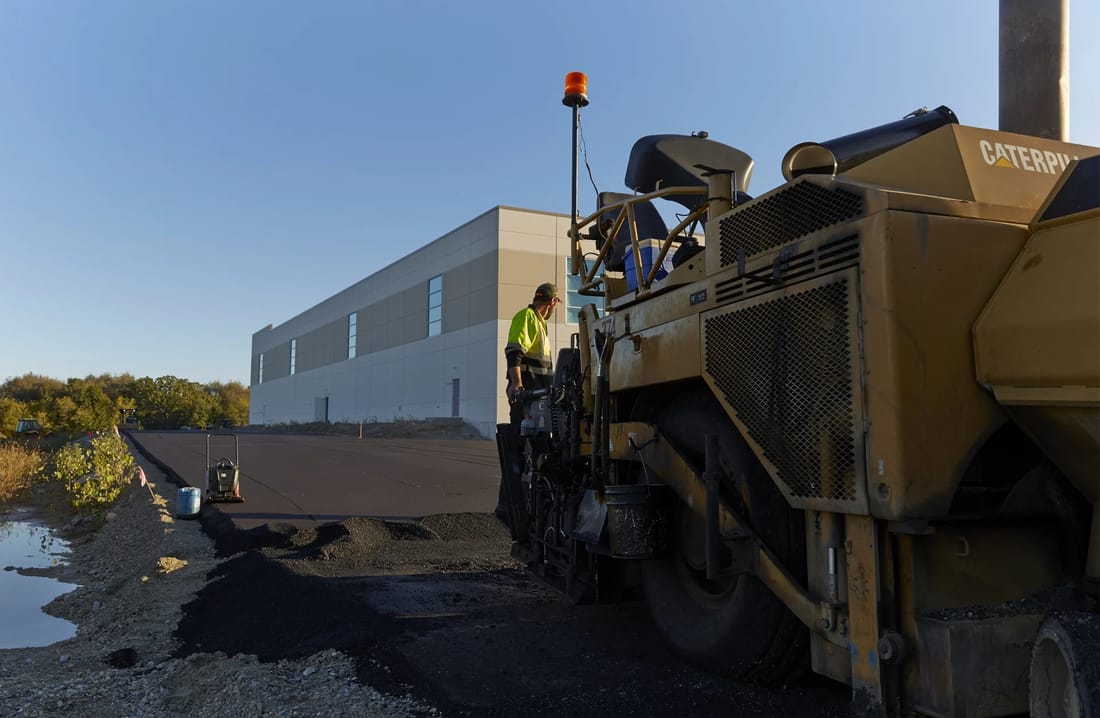
5. Asphalt paving. Once the base is dense and proof rolled, we install hot mix asphalt at a thickness suited to your use. Light car parking can often use a slightly thinner section. Freight yards or dumpster pads need thicker asphalt and sometimes a stronger mix design.
6. Striping, signage, and final walkthrough. After the asphalt cures, we add parking stripes, ADA markings, directional arrows, stop bars, and wheel stops as needed. We walk the lot with you to confirm layout, drainage, and access are working the way you expect.
Asphalt Design Options for Different Jacksonville Commercial Sites
Not every commercial gravel to asphalt conversion should be built the same way. Precision Asphalt Jacksonville tailors pavement design to how your property functions and to local site conditions.
For typical office, medical, or retail parking lots, we usually recommend a layered approach: a properly compacted limerock base, then a surface course of dense-graded asphalt. In many Jacksonville neighborhoods, especially older shopping centers, drive aisles see more wear than parking stalls. We can selectively thicken asphalt in drive aisles or entrances, which controls cost while reinforcing the areas that take the most turning and braking.
Industrial and logistics properties near the port or along I-95 and I-10 often see heavy trucks, forklifts, and containers. In these locations, we may specify a thicker base, a stronger asphalt mix with more stone content, and special reinforcement at dock aprons, dumpster pads, and fuel delivery areas. Converting gravel to asphalt in these yards reduces dust for sensitive equipment and dramatically improves drainage and safety for pedestrians and drivers.
Many Jacksonville commercial properties sit in low-lying or marshy areas. Where groundwater is high, we may recommend underdrains, additional base thickness, or partial full-depth reconstruction in localized soft spots. In some cases you can phase improvements, starting with the worst truck paths and entrances, then paving additional gravel areas as budgets allow. Our team clearly explains these options, including their pros, cons, and life expectancy in our hot, humid coastal climate.
What Drives the Cost of Commercial Gravel to Asphalt Conversions
Property owners often ask why two gravel to asphalt projects of similar size can have very different prices. Precision Asphalt Jacksonville is transparent about the main cost drivers so you can plan realistically.
Base condition and thickness are usually the biggest factors. If your existing gravel is deep, well compacted, and drains correctly, we can reuse much of it and focus on reshaping and topping it. If the gravel layer is thin, mixed with soil, or saturated, we must add more stone and address drainage. This additional base work adds material and labor cost but is essential for long-term performance.
Site access and phasing also matter. In busy retail centers or active warehouses, we often need to phase the work to keep you open, working on one section at a time and scheduling night or weekend paving. This careful phasing protects your operations but can slightly increase cost compared to a wide-open, single-phase lot.
Thickness and mix design affect both cost and lifespan. Heavier truck traffic, tight turning movements, or high temperatures in open, unshaded lots justify thicker asphalt or higher performance mixes. It costs more up front but reduces patching, rutting, and structural failure later.
Drainage improvements can add line items, such as new or adjusted catch basins, swales, or added concrete gutter. In Jacksonville, ignoring drainage often leads to standing water that shortens pavement life, so we will tell you honestly when drainage corrections are worth the investment.
Finally, layout details such as adding new islands, curbing, or changing traffic patterns can influence cost. When we prepare your proposal, we separate these items so you can clearly see what is required to convert gravel to asphalt and what is optional for improved function and appearance.
Local Conditions, Common Problems, and How We Prevent Them
Jacksonville’s climate creates specific challenges for commercial gravel to asphalt conversions, and Precision Asphalt Jacksonville plans around them from the start.
Summer thunderstorms and tropical systems bring intense rainfall in short bursts. If a lot is not graded correctly, water will pond, especially near building entrances and at the bottoms of ramps. Ponding water seeps into small cracks and accelerates deterioration. We use proper slopes, tie into existing stormwater systems correctly, and check drainage during layout so your new asphalt sheds water quickly.
Our heat and sun are tough on pavement. In wide open lots, the asphalt surface can reach very high temperatures, which makes inadequate base or thin asphalt more likely to rut under turning vehicle loads. To combat this, we select appropriate mixes and, where needed, increase thickness in high load areas such as entrances and intersections.
Older commercial properties in Jacksonville sometimes have a history of unpermitted fill, buried debris, or previous pavement layers under the gravel. These buried materials can create soft pockets that show up as dips or cracking later. During the conversion, we watch for signs such as sudden changes in compaction or odd materials turning up in the grading process. When we find problem spots, we remove the unsuitable material and rebuild the base correctly rather than paving over a hidden issue.
We also account for Florida ADA and fire access requirements. When converting gravel to asphalt, grades and cross slopes must support compliant accessible routes from parking to building entrances. Fire lanes need specific widths and clearances. We coordinate layout and striping so your new paved lot does not create compliance problems during future inspections.
What to Expect When You Work With Precision Asphalt Jacksonville
Clear communication and careful planning are central to how Precision Asphalt Jacksonville handles commercial gravel to asphalt projects.
We start with an on site visit where we walk the property with you, listen to how your lot is used, and discuss any trouble areas such as constant puddles, delivery conflicts, or ADA concerns. You will receive a written proposal that spells out base work, asphalt thickness, drainage improvements, striping, and any optional upgrades as separate, understandable items.
Before work begins, we help you plan parking and access during construction. For active businesses, this may include temporary signage, cones, and phasing so customers, tenants, and employees still know where to park and how to reach entrances. We coordinate schedule around your busiest times, which might mean working off hours or breaking the project into well defined stages.
During construction, a project lead is always available to answer questions and walk the site with you. If we uncover subsurface issues that could affect performance, we stop and explain the condition and options before proceeding. When paving and striping are complete, we review the entire lot together and provide basic care instructions, such as how soon to allow heavy trucks on new asphalt and how to handle minor spills.
If you manage or own a commercial property in Jacksonville, FL and are ready to convert gravel areas into a smoother, cleaner, and more professional looking asphalt surface, Precision Asphalt Jacksonville can provide a detailed, locally informed plan that fits both your site conditions and your budget.