Home › Commercial Asphalt Resurfacing & Overlays
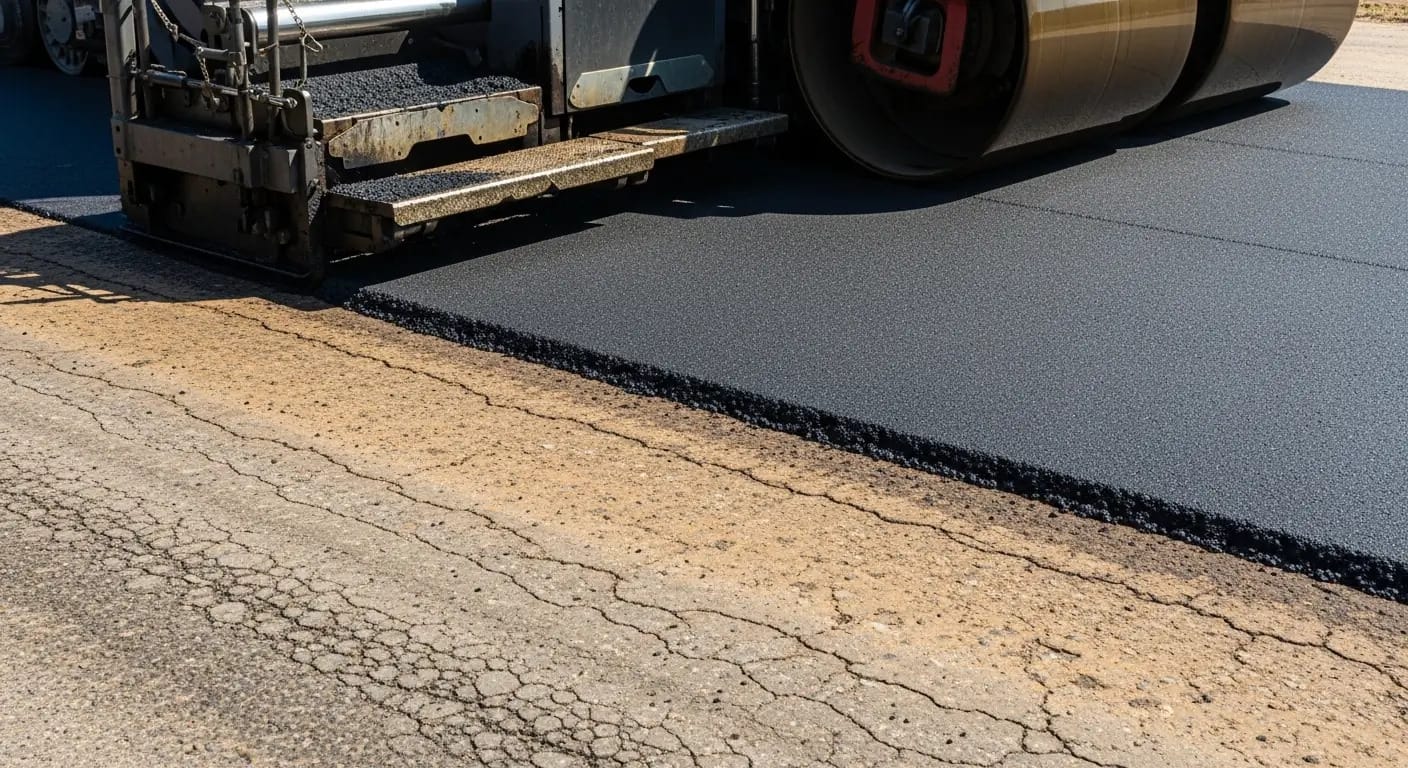
Refresh your existing pavement with commercial asphalt resurfacing in Jacksonville, FL. We mill, repair, and overlay worn lots and drive lanes with new asphalt. This cost effective process restores a smooth, dark surface without the expense of full reconstruction.
Precision Asphalt Jacksonville provides professional commercial asphalt resurfacing throughout Jacksonville, FL, Florida and the surrounding area. Our licensed, insured crew delivers safe, clean, on-time work with a free estimate before anything begins. Call (904) 817-0896 or request your free quote.
Commercial Asphalt Resurfacing for Jacksonville Properties
When commercial asphalt starts to crack, ravel, or hold water, you do not always need a full tear out. Commercial asphalt resurfacing gives Jacksonville property owners a way to restore parking lots and drives by installing a new asphalt layer over a sound base. Precision Asphalt Jacksonville focuses on this middle ground solution so your business can avoid unnecessary cost and downtime.
Resurfacing, also called an asphalt overlay, is ideal when your lot looks worn but the sub-base is still structurally solid. You still get a smooth, black, professional-looking surface for customers, employees, and deliveries, but at a lower cost and with less disruption than full reconstruction. We see this most often for retail centers, office parks, industrial yards, churches, and HOA communities across Jacksonville and the Beaches.
Our team lives and works here, so we understand how Northeast Florida heat, daily UV exposure, and intense summer rain affect asphalt. We design every resurfacing project around those local conditions, not a generic national template, so your new surface holds up to both heavy use and unpredictable weather.
How Commercial Asphalt Resurfacing & Overlays Actually Work
Effective commercial asphalt resurfacing in Jacksonville is a process, not just dropping a new layer of asphalt and rolling it flat. Precision Asphalt Jacksonville follows a defined sequence so the overlay bonds properly and drains correctly.
First, we walk the site with you. We look for base failures, soft spots, rutting in drive lanes, standing water, and areas where trucks turn tightly. We mark locations that are too damaged for overlay and may need full-depth patching. Catch basins, manholes, and concrete interfaces (such as dumpster pads and sidewalks) are checked so the finished surface will not create tripping hazards or ponding.
Second, we mill or grind high spots and transitions. In many Jacksonville lots, prior maintenance has left multiple layers of sealer or patch. We use a milling machine to remove those buildup areas and to create clean edges at tie-in points, such as street entrances and around drains. This step is critical so the new overlay does not sit higher than curbs or create a lip at your property entrances.
Third, we repair structural failures. Any alligator cracking that moves under traffic usually means a weak base. We saw cut and remove those failed panels, rebuild the base with compacted aggregate, then place and compact new hot-mix asphalt to match surrounding grades.
Fourth, we thoroughly clean and tack the surface. Power brooms and blowers remove dust and debris so the overlay can bond. We then spray a tack coat, a thin asphalt emulsion, across the surface. This sticky layer is what bonds the existing pavement to the new asphalt overlay so the two act as one system.
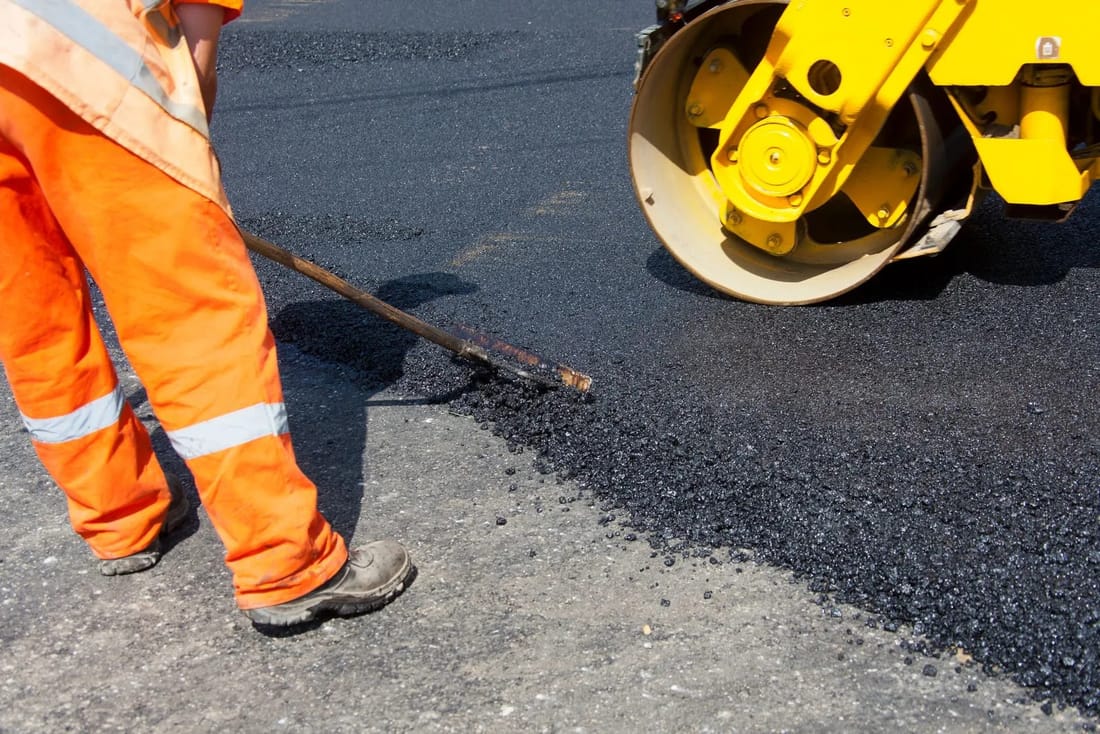
Finally, we install the new asphalt overlay using pavers and steel drum rollers. Typical overlay thickness for commercial lots in Jacksonville ranges from 1.25 inches to 2 inches, depending on traffic load. We adjust the slope subtly to improve drainage toward existing inlets so afternoon storms do not leave standing water in travel lanes or accessible parking.
Overlay Options: Thickness, Mix Types, and Drainage Planning
Every commercial asphalt resurfacing project is tailored to the business that uses it. At Precision Asphalt Jacksonville, we provide options that actually affect performance, not just the appearance.
Overlay thickness: Light duty parking areas that see mostly cars and SUVs can often use a 1.25 to 1.5 inch overlay. Drive lanes where garbage trucks, delivery trucks, and box trucks travel usually receive 1.5 to 2 inches. In loading zones or at entrances where heavy vehicles turn and brake, we may recommend additional structural patching beneath the overlay or a thicker lift to prevent rutting.
Mix designs: We typically use FDOT-approved hot-mix asphalt mixes that hold up to Jacksonville heat and daily temperature swings. For higher traffic or truck areas, we can specify a mix with a higher stone content and better rut resistance. In shaded areas where moisture lingers and algae growth is common, we pay extra attention to tight compaction and slope to reduce slick spots.
Drainage adjustments: Resurfacing is a chance to fix chronic puddles. By changing overlay thickness gradually, we can subtly re-profile the surface so water flows toward drains and outfalls. In older Jacksonville properties with flat lots, we may mill more aggressively in low spots, then reshape the overlay to gain slope without changing finished curb heights.
Surface texture and future maintenance: A properly compacted overlay has a tight, uniform surface that takes striping well and resists early raveling. We plan for your maintenance cycle by recommending when to sealcoat, usually 6 to 12 months after resurfacing, so the asphalt has time to cure before sealing.
Cost Drivers for Commercial Asphalt Resurfacing in Jacksonville
Resurfacing is usually more affordable than full reconstruction, but cost can vary widely depending on conditions at your property. Precision Asphalt Jacksonville explains these factors upfront so you can budget accurately and compare proposals fairly.
Site preparation and milling: If your lot has multiple layers of old sealer, patching, or uneven transitions, we must spend more time milling and surface prep. Removing extra thickness around drains and entrances takes additional machine time, which affects cost.
Structural repairs: Areas that require full-depth patching are more labor and material intensive than simple overlay. If we discover widespread base failure during evaluation, we will outline two options, targeted patching before overlay or phased reconstruction of problem areas, with costs separated so you can prioritize.
Overlay thickness and mix: More asphalt means more cost. A 2 inch overlay across an entire property will cost more than 1.5 inches, but sometimes a variable thickness design, thicker in the truck lanes and thinner in light parking bays, provides the best balance between budget and performance.
Access and phasing: Busy retail centers and medical offices in Jacksonville often need night or weekend work so operations can continue. Working in multiple phases, barricading smaller sections, and returning to re-stripe over several days increases labor and mobilization costs, but it may avoid lost revenue from closing your lot.
Local factors: Dump fees, plant location, and traffic patterns all affect trucking and production in Jacksonville. We plan paving times to avoid rush hours and summer thunderstorms as much as possible, which helps keep the job efficient and avoids issues with asphalt cooling too quickly on the way from the plant.
Common Problems and How We Prevent Them
Poorly planned overlays can create new headaches for property managers. Precision Asphalt Jacksonville focuses on the problems we see most often in Jacksonville and designs each commercial asphalt resurfacing project to avoid them.
Ponding water: Many older lots have low spots that collect water after every summer storm. Instead of simply paving over, we laser check elevations around drains and curb lines, then adjust prep milling and overlay thickness so water flows to inlets. If a drain is too high, we can adjust frame elevations so the grate sits correctly in the new surface.
Reflective cracking: If cracks in the old pavement are not addressed, they can reflect through the new overlay. We treat larger structural cracks and joints with crack repair or localized patch before paving. This step does not eliminate all future cracking but significantly slows it down.
Raised thresholds and trip hazards: Without proper planning, overlays can create bumps where asphalt meets concrete walks, ramps, or building entries. We protect these interfaces by milling down in front of them and setting precise screed heights so the new asphalt ends flush with thresholds. This is especially important for ADA compliance at accessible routes.
Premature wear in truck areas: Drive lanes behind shopping centers and at dumpster enclosures see very different loading than customer parking. We identify these zones during inspection and may recommend thicker asphalt, beefed up base repairs, or, in some cases, concrete pads at dumpster or compactor locations so the overlay around them lasts longer.
Local Considerations: Permits, ADA, HOAs, and Scheduling
Working in Jacksonville means dealing with local requirements that impact commercial asphalt resurfacing. Precision Asphalt Jacksonville is familiar with the rules that affect your project and can coordinate with your property manager, HOA board, or tenant representatives.
Permitting: For most basic overlays that do not change drainage patterns or add impervious area, formal permits are often not required. However, if the project changes grades near the right of way or modifies drainage structures, we may need to coordinate with the City of Jacksonville or the appropriate county department. We help you determine if any approvals are necessary before work begins.
ADA and striping: When resurfacing, it is a good time to confirm that accessible parking, access aisles, and ramps meet current ADA standards. Slope in accessible spaces and routes is especially important. We can measure existing grades, make minor slope corrections with the overlay where feasible, then re-stripe compliant stall counts and markings based on your occupancy and use.
HOA and community properties: Many Jacksonville associations require advance notice to residents and approval of paving schedules. We provide clear phasing plans, maps showing temporary parking locations, and HOA-ready documentation that boards can share with homeowners.
Business-friendly scheduling: For retail centers and offices, we often schedule work in the evenings, overnight, or on weekends to limit the impact on visitors and staff. We can divide large lots into sections so you always have open parking and clear fire lane access while the work proceeds.
Working With Precision Asphalt Jacksonville
Choosing a partner for commercial asphalt resurfacing is about more than a price per square foot. It affects how safe, attractive, and functional your property will be for years. Precision Asphalt Jacksonville approaches each overlay as a long-term investment in your site.
We start with a site visit and conversation about how your property is used today and how that might change. An industrial yard with forklifts and 18 wheelers needs very different reinforcement than a professional office park, even if the square footage is similar. We map use patterns, traffic flow, and problem areas, then build a resurfacing plan that fits.
You receive a written scope that separates work items, such as full-depth patching, milling, overlay thicknesses, and striping, instead of one vague lump sum. This makes it easier to compare our proposal with others and to scale the project in phases if needed.
During construction, our crew leaders stay in contact with your on-site representative or property manager. We provide daily updates on which areas will be closed, when traffic can return, and when striping will be complete. At the end of the project, we walk the site with you to review the work, answer maintenance questions, and outline a sensible schedule for sealcoating and future inspections.
If you manage or own commercial property in Jacksonville, Orange Park, the Beaches, or nearby areas, Precision Asphalt Jacksonville is ready to evaluate whether commercial asphalt resurfacing and overlays are the right fit for your pavement and budget.